 Fmo Beauty
Fmo Beauty
Fmo Beauty
If you have noticed your foundation looking fresh at application but orange by lunchtime, you are not imagining it. Many people ask, “why does my foundation oxidize and turn orange?” The answer usually involves several small changes rather than one single fault. Air exposure can alter certain pigments. Skin oils may deepen the finish. Sweat, skincare residue, sunscreen, and humidity can also change how the formula appears.
In 2026, foundation formulas continue to use complex pigment blends, skin-conditioning ingredients, and long-wear polymers. These ingredients can behave differently across skin types. A shade that matches your jaw in a store may look warmer after four hours on an oily forehead. Lighting matters too. Cool bathroom lights can hide orange tones, while daylight reveals them clearly. I have also seen oxidation blamed when the real problem was an overly warm undertone or a yellow primer underneath. That distinction matters.
Small tests help.
Apply the foundation to clean, moisturized skin, then wait at least thirty minutes. Compare it beside your jawline in natural daylight. Test the shade with your usual sunscreen, because products can interact visually. Check the bottle’s age and storage conditions, especially if it sat near a sunny window. These steps cannot guarantee a perfect match, and I have sometimes misread a shade after judging it too quickly. Still, careful observation can reveal whether the issue is true oxidation, oil breakthrough, color mismatch, or changing light. Understanding those differences makes future shade choices more reliable.
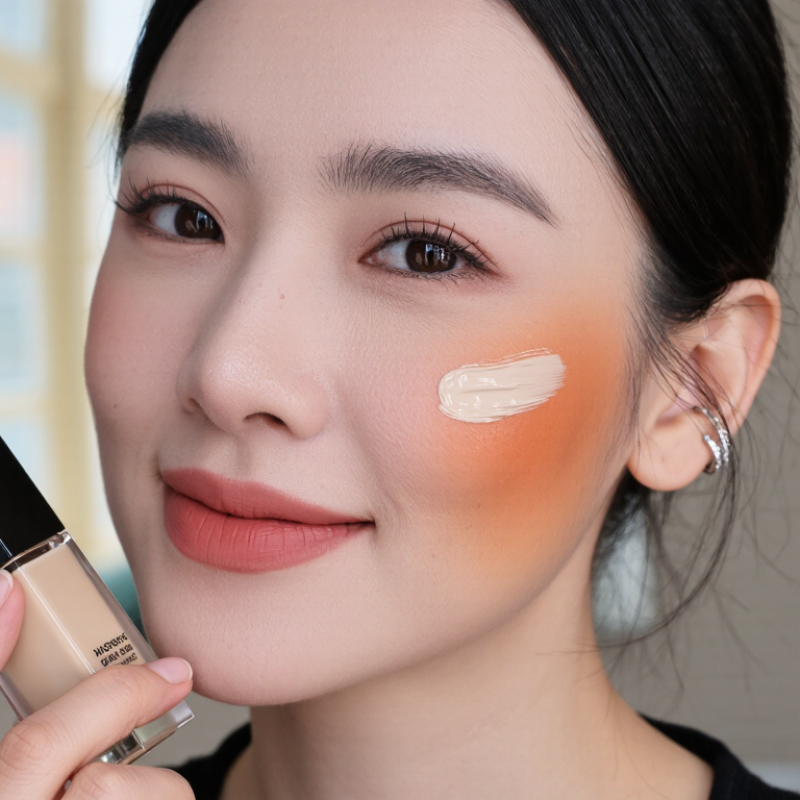
Foundation oxidation is a color change that happens after makeup meets air, skin oils, sweat, or skincare residue. The pigments can darken or shift warmer, making the foundation look orange. It is not always true oxidation, though. Sometimes the shade is already too warm, or indoor lighting hides the mismatch.
I noticed this after applying foundation to my cheeks one morning. It looked neutral at first, then became noticeably orange near my nose. My skin was moisturized, and the product may have mixed with leftover sunscreen. That experience taught me to test makeup on the jawline, not the hand. Wait 20 to 30 minutes. Check it near a window.
Skin chemistry also matters. Sebum levels, humidity, pH, and the foundation’s formula can affect the final color. A heavy skincare layer may increase slipping and uneven pigment buildup. Applying less product over clean, fully absorbed skincare can help. Setting powder may reduce oil movement, but it cannot correct the wrong undertone. I sometimes blamed the foundation too quickly; lighting and shade selection were partly responsible. A reliable test uses a thin layer, natural daylight, and several hours of wear. If the color turns orange only in warm bathroom light, oxidation may not be the real problem.
| Dimension | What Happens | Why It May Look Orange | Typical Timing or Clue | Practical Check |
|---|---|---|---|---|
| Foundation oxidation | Pigments and other formula components can change appearance after exposure to air, skin oils, moisture, and light. | The shade may become deeper, warmer, or more yellow-orange than it looked during the initial application. | Often noticed after approximately 15–60 minutes, although the timing varies by formula, skin, and environment. | Apply a stripe to the jawline and compare it with the neck after 30–60 minutes in natural daylight. |
| Skin sebum | Natural oils can mix with the foundation film and alter how pigments reflect light on the skin. | Oil can make a base appear darker, shinier, and warmer, especially in the T-zone. | More visible on oily areas or later in the day as shine increases. | Blot one side of the face and compare it with the unblotted side under the same lighting. |
| Formula pH and skin chemistry | The interaction between a product’s ingredients and the skin’s slightly acidic surface can affect color perception and wear. | A warm undertone can become more noticeable as the product settles and forms a film. | The effect may appear only after the product has dried and set. | Test the product on clean, moisturized skin and repeat the test over your usual skincare routine. |
| Shade undertone mismatch | A foundation can be close in depth but too yellow, peach, or red for the wearer’s undertone. | A warm or peach-heavy base may read orange even when no significant chemical color change occurs. | The orange cast is usually visible immediately and may become stronger as the product settles. | Compare the shade with the neck and chest rather than matching only the center of the face. |
| Lighting and camera white balance | Warm indoor bulbs and automatic camera processing can change how skin and makeup colors are displayed. | Yellow or amber lighting can exaggerate a foundation’s warm or orange tones. | The color may look different indoors, outdoors, and in photographs. | Evaluate the shade in indirect natural daylight and, if needed, under the lighting used most often. |
| Skincare and sunscreen layers | Moisturizers, oils, and sunscreen can change slip, drying time, shine, and the way pigments sit on the skin. | A richer or more emollient layer may increase shine and make the base appear warmer or darker. | Differences are most noticeable when the foundation is tested over a different routine than usual. | Allow skincare and sunscreen to settle before applying foundation, then test the complete routine. |
| Application thickness | A thicker layer contains more pigment and creates a denser color film on the skin. | Heavy coverage can look more saturated and therefore more visibly yellow, peach, or orange. | The effect is strongest in areas where multiple layers or spot coverage are applied. | Apply a thin, even layer first and assess the color after it dries before adding coverage. |
| Product age and storage | Heat, sunlight, air exposure, and repeated opening can gradually affect cosmetic texture, odor, and color. | An older or poorly stored product may darken, separate, or develop an unusual warm cast. | Changes may develop between uses rather than only after application. | Store tightly closed in a cool, dry place and discard it if the smell, texture, or color has noticeably changed. |
| Humidity, heat, and perspiration | Heat and sweat can increase moisture and oil on the skin, affecting how the foundation wears. | The base may become shinier, less even, and visually warmer as it mixes with skin oils and moisture. | More common during hot, humid weather or physical activity. | Repeat the wear test in the climate and conditions where the foundation will normally be used. |
| Oxidation versus transfer | Foundation can also look orange because it has mixed with skincare, transferred unevenly, or worn away over redness; this is not necessarily oxidation. | Uneven pigment concentration can create orange patches or a darker perimeter without a uniform shade change. | Patchiness, streaks, or color loss in friction areas suggest wear or transfer rather than true oxidation. | Check whether the color changed evenly across the face and inspect areas touched by masks, clothing, or hands. |
Note: Foundation color change is influenced by the product formula, skin oils, skincare, environment, application amount, storage, and lighting. A controlled jawline test in natural daylight is the most reliable way to evaluate whether a shade truly oxidizes.
Sebum, sweat, and skincare residue can warm foundation pigments. Extra oil often makes beige shades appear deeper. Lighting can deceive.
Skin pH may influence the surface environment, but it rarely explains dramatic color changes alone. Pigments, oils, and undertones matter together.
The nose and forehead often change first because they produce more sebum. Orange patches may appear around the nostrils.
Yes. Heavy or partly absorbed moisturizer can disturb the foundation film. Wait ten minutes after skincare. I once blamed the formula too quickly.
Sometimes, but not always. As the liquid dries, volatile ingredients leave a denser pigment layer. The result may look warmer.
Moisture can interrupt film formation and create darker patches. Humid weather makes oil and pigment interaction easier to notice.
Apply foundation to clean skin on one side. Use your normal skincare on the other side. Compare both areas after 30 and 60 minutes.
Test it along your jaw in daylight, not only indoors. A slightly lighter or less yellow shade may help, but results are not guaranteed.
Why does my foundation oxidize and turn orange? Foundation oxidation happens when pigments and other formula ingredients react with oxygen, skin oils, moisture, and natural acidity, causing the color to deepen or shift warmer throughout the day. Heat, humidity, skincare residue, and excess sebum can speed up this change, while a formula’s pigment balance and texture may make orange tones more noticeable. Skin chemistry can also vary from morning to evening, so a shade that looks correct at first may appear darker or warmer hours later.
To reduce unwanted oxidation, test foundation on the jawline and wait at least 15–30 minutes before judging the match. Apply skincare sparingly, allow each layer to absorb, and use a suitable primer to help control oil and moisture. Choosing a slightly more neutral shade, applying thin layers, and setting makeup carefully can improve the final result. If the color turns orange, blending with a neutral mixer, using a lighter concealer, or removing excess product may help correct it.
