Fuller-looking lips do not require dramatic overlining or expensive treatments. They require control, balance, and a believable edge. This guide explains how to use lip liner to bigger lips while keeping the result soft, symmetrical, and wearable.
The global lip care market was valued at approximately $4.45 billion in 2023, according to Grand View Research. Its projected growth reflects stronger interest in everyday lip definition and conditioning. However, market growth does not prove that every technique works. Your own lip shape still matters more than a trend.
Professional makeup artist Lisa Eldridge often teaches a useful principle: “Enhance the natural lip shape, rather than disguise it.” That idea supports a safer, more practical approach. Start with hydrated lips, then choose a liner one shade deeper than your lipstick. Trace the cupid’s bow carefully. Overline only the center of the upper and lower lips. Keep the corners close to their natural borders.
Small changes work best.
Blend the inner line with a lip brush. Add a lighter lipstick to the center. A pinpoint of gloss can create reflected light, making the lips appear rounder. Avoid extending sharply beyond the corners. It can create shadows, smudging, or an artificial mouth shape.
Still, the technique is not perfectly predictable. Dry texture, uneven pigmentation, and changing facial expressions can affect the finish. Check the result in natural daylight. Then soften any line that looks too obvious. The most convincing fuller-lip effect often appears slightly imperfect, because real lips are not perfectly symmetrical.
Understand Lip Liner’s Role in Creating Fuller-Looking Lips
How to Use Lip Liner to Make Lips Look Bigger
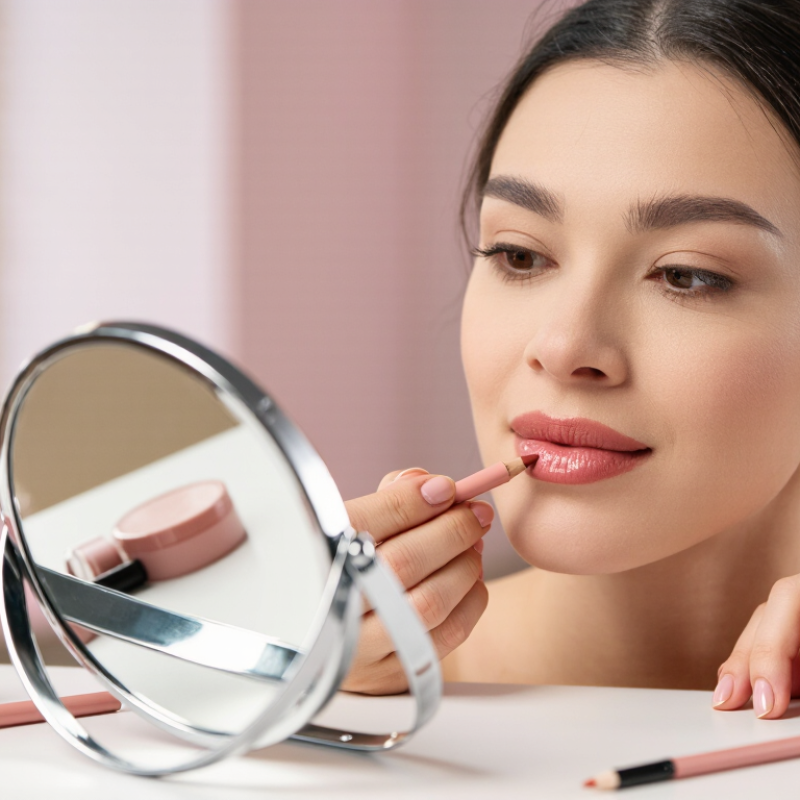
Lip liner does not physically enlarge lips. It creates a visual border, adds shadow, and guides attention toward the center. A fuller look depends more on balance than aggressive overlining. I usually begin on clean, moisturized lips, then blot away excess balm. This gives the pencil a steadier surface and helps prevent feathering around the mouth.
Trace the natural outline first. Then extend only the fullest sections, usually the cupid’s bow and the center of the lower lip. Keep the corners close to their real edges. Small changes work best. Use short, light strokes instead of one heavy line. Blur the inner edge with a small brush or fingertip, and fill most of the lips with the same liner. A lighter touch in the center can create dimension, while a slightly deeper shade along the outer line suggests depth. Avoid drawing far beyond the natural border; texture and movement can reveal the line quickly.
Check the result in daylight. Mirrors can be misleading. I once overlined both corners, expecting a fuller shape, but the mouth looked tense instead. Removing part of the line improved it. That mistake still matters: lip liner should support your features, not replace them. Choose a comfortable formula, stop if the skin stings, and remove makeup gently at night. Fuller-looking lips come from controlled contrast, clean edges, and restraint.
Choose a Lip Liner Shade and Formula That Look Natural
How to Use Lip Liner to Make Lips Look Bigger
A natural-looking lip starts with the right shade, not an exaggerated outline. Choose a liner close to your natural lip color or one shade deeper. Warm undertones suit peachy or caramel shades, while cool undertones often suit rose or muted berry tones. Test the color near a window, because indoor lighting can hide strong contrast. A creamy, blendable formula usually works best. Very dry formulas may emphasize flakes, while overly slippery liners can lose their shape.
In my makeup trials, slightly overlining the cupid’s bow and the center of the lower lip creates the most believable fullness. Keep the corners close to your natural edge. Then, soften the line inward with a small brush or fingertip. Add matching color over the center, rather than drawing a much wider outline. The effect should look like shadow, not a border. It may feel too subtle at first. That is normal. I once overlined every area and looked less polished, so restraint matters.
Tips: Check the liner in daylight. Exfoliate gently, but never scrub irritated lips. Press a tissue over the finished color to remove excess. If the formula stings or causes redness, remove it and stop using it. A slightly imperfect line can look more natural than a rigid one. Practice helps.
How to Use Lip Liner to Make Lips Look Bigger
Choose a Lip Liner Shade and Formula That Looks Natural
The chart compares the relative sRGB luminance of representative lip-liner shades. Shades with a smaller luminance gap from your natural lip color generally create softer-looking definition, while a slightly deeper shade can add dimension when applied just outside the natural lip line. Use a precise pencil for controlled outlining, a creamy formula for blurred edges, or a gel formula for longer-lasting definition.
Overline the Lips Strategically for Balanced Volume
How to Use Lip Liner to Make Lips Look Bigger
Overlining works best when it follows your natural shape instead of replacing it. I usually begin at the cupid’s bow, tracing just above the outer edge. Keep the center fuller, then return to the natural line near each corner. This creates balanced volume without making the mouth look drawn on. Use a sharp pencil and light, short strokes. A soft rose or brown shade often looks more believable than a very dark outline. Check the shape from different angles, especially in daylight.
Tips: Outline only the fuller sections. Soften the border with a small brush. Add a little lighter color to the center. Avoid extending the corners too far, because they can look uneven or downturned. Blot once, then inspect the edges.
My first attempts were too symmetrical, and that made the result appear artificial. Lips are naturally different from one side to the other, so perfect matching is not always helpful. I now adjust each side gradually, using the lower lip’s width as a visual guide. Keep the line thin and blend it inward before adding color. A small amount of shine at the center can enhance dimension, but too much may blur the outline. Remove the product if your lips sting, itch, or become unusually dry.
How to Use Lip Liner to Make Lips Look Bigger - Overline the Lips Strategically for Balanced Volume
| Lip Area |
Strategic Overline |
Visual Purpose |
Application Method |
Balance Check |
| Cupid’s bow |
About 1–2 mm above the natural center peaks |
Adds height while preserving the natural shape of the upper lip |
Use short, light strokes and connect both peaks smoothly |
Keep the two peaks symmetrical rather than making the center completely straight |
| Upper-lip center |
Follow the outer edge of the vermilion border, extending no more than 1–2 mm |
Creates a fuller appearance without making the outline look artificial |
Work from the center toward each corner, slightly softening the line as you move outward |
The upper lip should remain visually lighter or smaller than the lower lip unless naturally balanced otherwise |
| Lower-lip center |
Trace just outside the natural lower border, generally up to 2 mm |
Builds the strongest impression of fullness where volume naturally appears |
Draw a shallow, rounded curve and blend inward with the liner |
Avoid extending the entire lower lip equally if it already appears full |
| Lip corners |
Stay on the natural border or slightly inside it |
Prevents the overlined shape from looking wide, flat, or downturned |
Use less pressure and taper the line before reaching the outer corners |
The corners should not extend farther outward than the natural lip contour |
| Asymmetrical areas |
Overline only the smaller or less-defined section |
Improves visual symmetry without adding unnecessary product everywhere |
Compare both sides in a mirror before filling with color |
Check the shape from the front and at a slight angle |
| Blending zone |
Soften the line 2–3 mm inward from the outline |
Removes a visible ring and makes the added volume look more natural |
Use a lip brush or fingertip to diffuse the inner edge before applying lipstick |
No harsh line should remain between the liner and lipstick |
| Finishing highlight |
Apply only to the center of the upper and lower lips |
Reflects light to emphasize the most prominent points |
Use a lighter gloss or a small amount of highlighting product at the center |
Keep the corners more muted to maintain a rounded, balanced effect |
Practical guideline:
For the most natural result, concentrate overlining at the center of the lips, keep the corners close to their natural outline, and blend the liner inward before applying lip color.
Blend and Finish the Look for a Seamless, Plumper Effect
A larger-looking lip depends less on a heavy outline and more on controlled blending. I learned this after creating sharp, uneven edges that looked obvious in daylight. Choose a liner close to your natural lip tone. Trace just outside the cupid’s bow and the center of the lower lip. Stay closer to your real border near the corners. This small adjustment preserves believable proportions.
Soften the line immediately.
Use a small, clean brush to pull the pigment inward by two or three millimeters. Leave the center slightly lighter, then tap a satin-finish color over it. Avoid dragging too much product across the outline. That can erase the shape and create patchiness. A tiny touch of brightness at the lip center may add dimension, but excessive shine can highlight texture. I sometimes overblend one side, so I check both corners in a mirror from several angles.
This technique reflects a wider preference for polished, natural-looking makeup. NIQ’s 2024 State of Beauty report recorded 7.3% global beauty sales growth in 2023, showing continued consumer interest in beauty routines and product experimentation. However, professional makeup artistry still favors restraint: the illusion should follow the mouth’s structure, not replace it. Press a tissue lightly over the lips, refine stray marks with a cotton swab, and inspect the finish after ten minutes. Lip products can settle unevenly as warmth and movement change the texture. That final check is easy to skip. It should not be.
Conclusion
Learning how to use lip liner to bigger lips starts with understanding how line, shading, and balance can create the illusion of fullness. Choose a liner that closely matches your natural lip color or lipstick, with a smooth formula that blends easily. Before applying, study your lip shape and lightly mark the center of the upper and lower lips, the Cupid’s bow, and the corners. This helps create a balanced outline instead of making the lips look uneven.
For a natural effect, slightly overline only the areas where you want more volume, especially across the center of the lips. Avoid extending too far beyond the corners, as this can look unnatural. Fill in part of the lips with the liner to add dimension, then blend the edges inward. Finish with lipstick or a touch of shine at the center of the lips to enhance the fuller appearance. With careful mapping, subtle overlining, and seamless blending, lip liner can make lips look plumper while keeping the result soft and polished.
 Fmo Beauty
