Fmo Beauty
China’s color-cosmetics industry offers extensive sourcing choices, from established manufacturers to flexible OEM and ODM factories. This article introduces ten leading Chinese color corrector suppliers and examines their formulation support, shade development, production capacity, packaging options, and quality controls. The selection should not rely on price alone. A reliable supplier should provide clear INCI documentation, batch traceability, stability testing, and evidence of compliant manufacturing practices.
Market demand supports closer attention to this category. Grand View Research valued the global color cosmetics market at approximately USD 84.9 billion in 2023 and expects continued growth through 2030. McKinsey’s beauty industry analyses also identify China as a major market shaped by digital discovery, ingredient awareness, and rapid product innovation. These reports indicate opportunity, but they do not guarantee every supplier’s performance. Samples still matter.
For buyers and makeup users, the practical question is simple: what is the correct way to use a color corrector? Apply a small amount after skincare and before foundation. Peach or orange can soften blue or purple shadows, while green can reduce visible redness. Lavender may brighten dull, yellow-looking areas. Use a thin layer, tap gently, and blend only where correction is needed. Too much product can create a gray or muddy finish. I have found that shade charts are useful, but real skin testing is better under natural daylight. A perfect match is not always realistic. Ask suppliers for wear tests, allergen information, and performance results across different skin tones before making a final decision.
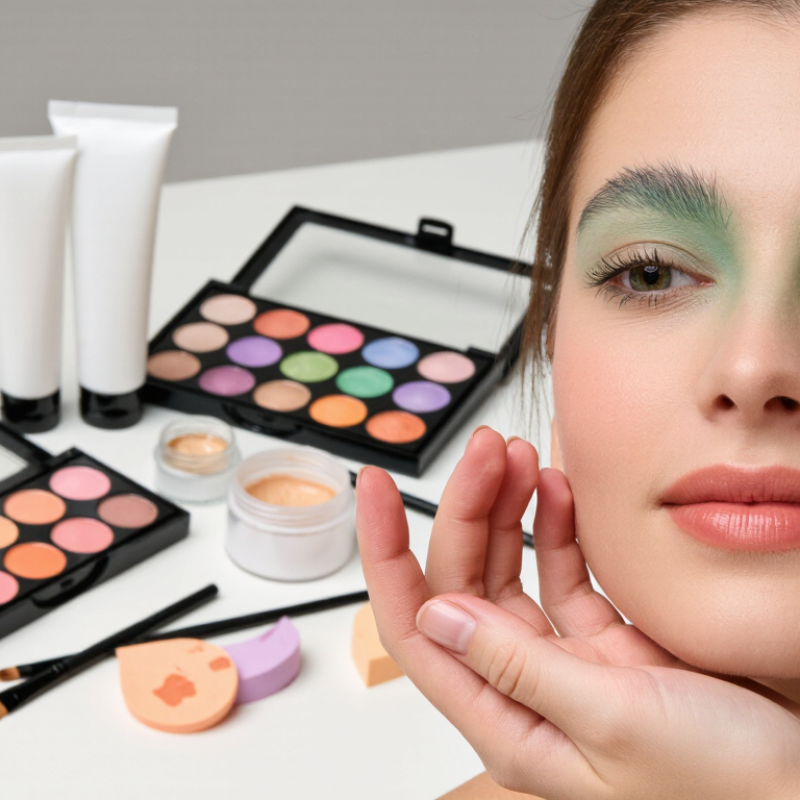
A color corrector is a sheer product that adjusts unwanted tones before concealer. It uses complementary colors from the color wheel. Peach can soften blue or purple shadows, while green can reduce visible redness. Lavender may brighten yellow or dull areas. Unlike concealer, it does not mainly match your skin tone. It changes the optical appearance underneath makeup.
Use a small amount on clean, moisturized skin. Place peach corrector under the eyes, or green around a red blemish. Tap gently with a fingertip, then apply a thin layer of skin-matched concealer. Heavy application often creates gray patches and emphasizes texture. In practice, lighting changes everything. A shade that looks perfect indoors may appear orange near a window. I still overcorrect sometimes, especially after poor blending.
Grand View Research estimated the global color cosmetics market at about USD 80 billion in 2023, with continued growth expected through 2030. This expansion reflects stronger interest in complexion products and more informed shade selection. Market data supports demand, but corrector performance still depends on undertone, pigmentation, and skin preparation.
Tips: Start with less than a rice grain. Check your face in daylight. Wait briefly before adding concealer. If redness remains, add coverage, not more green. Patch-test new formulas, especially on sensitive skin. A color corrector should disappear into the complexion, not become another visible layer.
China’s top ten color corrector suppliers differ mainly in texture, packaging, and customization. One specializes in lightweight liquid correctors for redness and dullness. Another produces creamy pots for dry skin and buildable coverage. A third offers color-correcting sticks for quick application. Palette-focused suppliers combine peach, green, lavender, and yellow shades in one compact case. Some factories develop silicone-free formulas with a soft, natural finish. Others provide high-pigment formulas for professional makeup artists. Several suppliers support private-label packaging, including tubes, cushions, jars, and airless pumps. A few focus on travel-size products with leak-resistant closures. The remaining suppliers often compete through fast sampling, shade matching, and flexible order quantities.
Color choice should follow the visible concern. Green can soften the look of surface redness, while peach or orange helps balance blue or purple shadows. Lavender may brighten yellow-looking areas. Apply a thin layer after skincare, then tap gently with a damp sponge or small brush. Foundation should follow, not replace, the corrector. Heavy application can create gray patches or emphasize texture. Test the formula on clean skin for several hours. My practical concern is consistency: a sample may feel smooth, while a later batch feels drier. Ask for ingredient details, production records, shade references, and batch testing before placing a large order. Supplier claims still need verification. A beautiful swatch is not enough.
Choosing the right color corrector supplier requires more than comparing prices. A dependable supplier should provide a complete ingredient list, shade information, batch traceability, and clear manufacturing details. Ask for small samples in green, peach, lavender, and yellow. Test them under daylight and indoor lighting. Skin tone, redness, and shadow depth can change the result.
Evaluate the supplier’s technical support before placing a large order. Ask how pigments are dispersed, how oxidation is checked, and how shelf life is confirmed. Request quality documents, safety data, and independent test reports when available. A certificate alone is not proof.
Check whether the packaging prevents leakage, drying, or unwanted color changes. Confirm minimum order quantities, lead times, sample costs, and communication procedures in writing. Reliable suppliers usually answer specific questions without making exaggerated claims.
Use the sample on several skin tones and apply it under foundation or concealer. Check blending, pilling, coverage, comfort, and wear after several hours. Keep notes with photos and test dates. My own mistake was judging a peach corrector only in bright studio light; it looked too orange outdoors. A supplier willing to adjust undertones and explain limitations is more valuable than one offering the lowest quotation. Small pilot orders reduce waste and reveal problems early.
How to Apply Color Corrector Step by Step
Choosing among the top ten color corrector suppliers matters, but application technique matters more. Grand View Research valued the global color cosmetics market at about USD 84 billion in 2023. That growth reflects wider demand for targeted complexion products. Color corrector should neutralize unwanted tones, not replace foundation.
Start with clean, moisturized skin. Apply a thin layer of primer if dryness causes patching. Use peach or apricot for bluish under-eye shadows. Choose green for visible redness, and lavender for dull, yellow-looking areas. Keep the amount small. A pinhead-sized dot often covers one under-eye. Tap gently with a fingertip or damp sponge. Do not rub.
Let the product settle for 30 seconds. Then press a lightweight concealer over it, matching your natural skin tone. The 2024 Circana U.S. beauty report showed continued consumer interest in complexion makeup, yet more product does not guarantee better coverage. I still overcorrect sometimes, especially with peach shades. The result looks orange under daylight. Check your face near a window, not only under bathroom lighting. If the color remains visible, remove excess with a clean cotton swab and blend the edges. Patch-test new formulas, and stop using them if irritation appears.
| Rank | Anonymous Supplier Profile | Corrector Shade | Primary Color Theory Use | Suitable Skin Concern | Recommended Product Format | How to Apply Step by Step | Amount & Finish | Key Quality Checks |
|---|---|---|---|---|---|---|---|---|
| 1 | Profile A — professional complexion supplier | Green | Neutralizes red because green sits opposite red on the color wheel. | Redness around the nose, cheeks, blemishes, and mild rosacea-prone areas. | Cream or liquid | Apply skincare and sunscreen first. Tap a very thin layer only on red areas. Blend the edges, then apply skin-tone foundation or concealer. | Use a rice-grain amount per small area; choose a natural or satin finish. | Even pigment dispersion, no excessive green cast, smooth blendability, and compatibility with foundation. |
| 2 | Profile B — private-label complexion supplier | Peach | Softens blue and blue-gray tones in light to medium skin tones. | Under-eye shadows, blue veins, and mild post-inflammatory discoloration. | Liquid or stick | Use a small flat brush or fingertip. Place the product on the darkest part of the shadow, tap outward, and cover with a thin layer of concealer. | Use a pinhead to rice-grain amount per eye; select a lightweight, crease-resistant finish. | Uniform peach tone, low drag, minimal creasing, and comfortable wear near the eye area. |
| 3 | Profile C — sensitive-skin formulation supplier | Yellow | Helps soften purple and violet discoloration. | Purplish under-eye areas, faint bruised-looking shadows, and uneven cool-toned marks. | Cream pot | Warm the product lightly with a fingertip. Tap onto the purple area, keep the coverage localized, and finish with a skin-tone concealer. | Apply a sheer layer; a soft matte or natural finish is generally easiest to layer. | Gentle formula, stable yellow pigment, low fragrance, and no visible patchiness after blending. |
| 4 | Profile D — high-pigment complexion supplier | Orange | Counteracts deep blue and blue-gray tones in medium to deep skin tones. | Strong under-eye darkness, hyperpigmentation, and old acne marks with a cool undertone. | Fuller-coverage cream | Apply moisturizer first. Press a very thin layer onto the dark mark, soften only the perimeter, wait briefly, and layer matching concealer over it. | Use minimal product to avoid an orange cast; choose a flexible satin finish. | High pigment concentration, controlled coverage, no caking, and reliable shade consistency between batches. |
| 5 | Profile E — tone-correction specialist | Red | Provides warmth to balance very deep blue, gray, or ashy discoloration. | Deep under-eye shadows and pronounced cool-toned hyperpigmentation on deeper skin tones. | Cream or compact | Use a small precision brush. Press the corrector onto the darkest zone, blend the boundary carefully, then apply a matching concealer without sweeping away the product. | Use a pinpoint amount; a satin finish helps prevent a dry, gray appearance. | Strong but controllable pigmentation, non-staining texture, smooth layering, and accurate undertone matching. |
| 6 | Profile F — brightening makeup supplier | Lavender | Helps neutralize excessive yellow or dull-looking tones. | Dull complexion, sallow areas, and yellowish discoloration. | Sheer liquid | Mix a tiny amount with foundation or tap it onto selected dull areas. Blend thoroughly, then add concealer only where extra coverage is needed. | Use a sheer layer; a luminous or natural finish gives the most even result. | Fine texture, low chalkiness, even light-reflecting particles, and no obvious purple residue. |
| 7 | Profile G — blemish-correction supplier | Blue | Can soften excessive orange or warm tones in selected complexion products. | Very warm foundation mismatch and localized orange discoloration; not usually required for everyday blemish correction. | Mix-in pigment | Place one small drop beside foundation rather than directly on the face. Mix completely, test on the jawline, and adjust gradually before applying. | Start with one drop per pea-sized amount of base; keep the finish consistent with the foundation. | Accurate pigment strength, easy dispersion, no separation, and clear mixing instructions. |
| 8 | Profile H — lightweight daily makeup supplier | Pink | Adds brightness and softens muted blue-gray tones in fair to light skin tones. | Fair-skin under-eye dullness and mild gray shadows. | Light liquid | Dot a small amount beneath the inner and outer under-eye area. Tap with a sponge or finger, then apply a thin concealer layer. | Use a small dot per eye; a radiant but non-glittery finish works best. | Lightweight feel, low settling into fine lines, smooth optical finish, and gentle eye-area suitability. |
| 9 | Profile I — warm undertone complexion supplier | Apricot | Balances blue and gray tones with a softer warmth than orange. | Medium skin tones with under-eye darkness or cool-toned marks. | Cream-to-powder | Apply after moisturizer in a thin layer. Tap over the shadow, blend outward, and set lightly only after applying skin-tone concealer. | Use a rice-grain amount per eye; a natural finish is suitable for daily wear. | Buildable coverage, no oily separation, smooth powder transition, and stable warm undertone. |
| 10 | Profile J — universal complexion supplier | Neutral beige | Provides localized coverage when strong color correction is unnecessary. | Minor discoloration, small blemishes, and areas requiring direct skin-tone coverage. | Pot, stick, or liquid | Match the product to the skin tone and undertone. Tap onto the mark, blend the edge only, and set with a small amount of translucent powder if needed. | Use spot coverage rather than a heavy layer; select a natural or soft-matte finish. | Accurate shade range, flexible coverage, transfer resistance, and consistent color after drying. |
Color correctors work by balancing unwanted tones, but many users apply too much product. A small amount is usually enough. Green can soften visible redness, while peach or orange can reduce blue or purple shadows. Skin depth matters, so the same shade will not suit every customer. Test the formula under natural light, not only under bright showroom lamps.
Tips: Match the corrector to the discoloration, not the entire face. Apply thin layers with a clean brush or fingertip. Let each layer settle before adding more. Always patch test new formulas, especially on sensitive skin. Check the ingredient list, batch information, and storage guidance when comparing suppliers in China. Reliable suppliers should provide clear specifications and consistent samples.
A common mistake is choosing a color based on a product chart alone. Undertones, lighting, and foundation coverage can change the result. I once overcorrected a bluish area and created a dull orange patch; less product would have worked better. Another mistake is rubbing the corrector away while blending foundation. Press gently instead. Keep tools clean, close containers after use, and replace products when their smell, texture, or color changes. Documentation helps, but real wear testing still matters. Supplier claims should be checked against physical samples and repeat orders.
It is a sheer product used before concealer. It adjusts unwanted skin tones. It does not mainly match your complexion.
Correctors use complementary colors from the color wheel. Peach can soften blue or purple shadows. Green can reduce visible redness. Lavender may brighten yellow or dull areas.
Peach usually helps with blue or purple under-eye shadows. Skin depth still matters. A shade that works on one person may look orange on another.
Start with less than a rice grain. Place it only on the discolored area. Too much product can create gray patches and emphasize texture.
Use it on clean, moisturized skin. Tap gently with a fingertip or clean brush. Let it settle briefly, then add thin concealer. Press gently instead of rubbing.
The shade may be too strong, or the layer may be too thick. Indoor lighting can hide problems. Check your face near a window in daylight.
Add a small amount of concealer instead of more green corrector. More green may create a dull patch. I still overcorrect sometimes, especially after poor blending.
Check the ingredient list, batch information, and storage guidance. Request clear specifications and consistent samples. Test physical samples before trusting supplier claims.
Patch-test new formulas, especially on sensitive skin. Keep tools clean and close containers after use. Replace the product if its smell, texture, or color changes.
This guide explains what a color corrector is, how it works, and how different shades can help neutralize concerns such as redness, dullness, dark circles, and uneven skin tone. It introduces ten leading color corrector suppliers in China by focusing on product features such as shade variety, texture, coverage, formulation options, packaging, quality control, and customization services. It also provides practical advice for comparing suppliers, including reviewing product consistency, safety documentation, manufacturing capabilities, minimum order quantities, communication, and delivery reliability.
The article also answers the question, “what is the correct way to use a color corrector,” through a simple step-by-step process: prepare the skin, apply a small amount of the appropriate shade, blend gently, add foundation or concealer, and set the makeup when necessary. It highlights common mistakes, including using too much product, choosing an unsuitable shade, applying it over unprepared skin, or blending too aggressively. These best practices help create a smoother, more natural, and balanced makeup finish.
